As organizations increasingly expand workloads across public cloud, SaaS platforms, AI services, and on-prem infrastructure, financial governance is becoming more complex. FinOps teams need consistent visibility into spending across these environments, but cost data is often reported in different formats depending on the platforrm.
The FOCUS specification (FinOps Open Cost and Usage Specification), developed by the FinOps Foundation, provides an open standard for normalizing cost and usage data across providers. By standardizing billing datasets, FOCUS helps organizations analyze and compare spending across cloud and technology services more effectively.
Kion was an early adopter and integrator of the FOCUS specification, helping organizations normalize billing data across major cloud providers including AWS, Azure, GCP, and OCI. However, modern infrastructure extends well beyond traditional cloud services.
To support this shift, Kion developed automated FOCUS converters that transform cost datasets from AI platforms, SaaS services, and on-prem environments into the FOCUS format. By automating this transformation, organizations can quickly ingest new cost sources into their Kion FinOps+ workflows and gain faster visibility into spending across the technology estate.
The Challenge: FinOps Visibility Beyond Public Cloud
Public cloud providers already produce relatively structured billing and usage data. However, AI platforms, SaaS tools, and on-prem environments often expose cost data in very different formats.
This creates several challenges for organizations trying to implement FinOps practices:
- Cost data from SaaS platforms may not align with cloud billing schemas
- AI platforms may report usage in non-standard units that don’t align with traditional cloud billing models.
- On-prem environments often lack standardized cost reporting entirely
- Historical spend data may require manual transformation before analysis
Even with the FOCUS specification providing a common data standard, organizations still face a major hurdle:
Transforming diverse datasets into FOCUS-compliant data quickly enough to provide immediate value.
This is where automation becomes critical.
Bridging the Gap: Automated FOCUS Converters
While FOCUS standardizes cost data, it does not solve the challenge of transforming raw datasets into that format.
To address this, Kion developed custom FOCUS converters that transform cost data from SaaS platforms, AI services, and on-prem environments into the FOCUS format.
These converters automate what would otherwise be a manual data transformation process, enabling organizations to bring additional environments into their FinOps workflows faster.
Examples of platforms supported today include:
AI Platforms
- OpenAI
- Anthropic
SaaS Platforms
- Databricks
- MongoDB Atlas
On-Prem Infrastructure
- VMware environments
Kubernetes
- OpenCost
Partners (MSP, ISV, Resellers)
- Azure Partner Center
By automatically converting these datasets into FOCUS-compatible data, organizations can quickly ingest spend data into Kion and begin analyzing it immediately.
Accelerating Time to Value for FinOps Teams
The key benefit of automated converters is speed of implementation.
Without automation, organizations may need to:
- Export raw cost data from multiple services
- Manually map fields to a standardized format
- Normalize historical data
- Load the transformed data into a FinOps platform
This process can take weeks or months.
Automated FOCUS converters streamline this workflow by handling the data transformation automatically during onboarding, allowing organizations to start analyzing cost data much sooner.
This accelerated time to value is especially important as organizations experiment with AI workloads, where cost visibility is often the first step toward responsible governance.
Supporting FinOps for AI and Emerging Infrastructure
As AI adoption increases, organizations are looking for ways to track and manage the financial impact of AI services.
Many AI platforms expose usage data differently than traditional cloud services, often in units like:
- Tokens
- API calls
- Model usage
- Credits
FinOps tools must therefore evolve to support both infrastructure costs and AI consumption models.
Organizations across regulated industries, including healthcare, energy, biotechnology, and the public sector, are already using Kion to gain visibility into AI-related spending as part of their broader financial governance strategies.
By standardizing and transforming these datasets into a consistent format, organizations can begin to apply FinOps principles to AI workloads just as they would with cloud infrastructure.
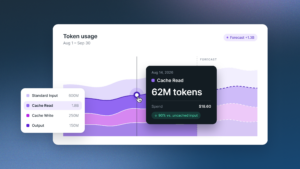
Looking ahead, deeper AI usage reporting, such as token-level visibility, may further expand how organizations manage and optimize AI costs.
As infrastructure continues to evolve, combining open standards like FOCUS with automated data transformation will be essential for gaining complete financial visibility across cloud, SaaS, AI, and on-prem environments.
Frequently Asked Questions (FAQ)
What is the FOCUS specification and why does it matter for FinOps?
FOCUS (FinOps Open Cost and Usage Specification) is an open standard created by the FinOps Foundation that normalizes cost and usage data across cloud providers and services. It enables organizations to analyze spending consistently across cloud, SaaS, AI, and on-prem environments, improving financial visibility and governance.
What are FOCUS converters and why are they needed?
FOCUS converters are tools that transform raw billing or usage data from platforms such as SaaS services, AI providers, or on-prem infrastructure into the FOCUS standard format. While FOCUS defines a common schema, many platforms still export data in proprietary formats, making converters essential for automating data normalization.
What types of services can be integrated using converters?
Converters can normalize cost data from a wide range of services, including:
- AI platforms (such as OpenAI and Anthropic)
- SaaS services (such as Databricks or MongoDB Atlas)
- On-prem infrastructure (such as VMware)
- Kubernetes cost data sources like OpenCost
How does this approach help organizations manage AI costs?
By converting AI platform usage data into standardized cost datasets, organizations can incorporate AI spending into their FinOps workflows. This makes it easier to track usage, allocate costs, and apply governance to AI services.
How do automated converters improve time to value?
Automated converters eliminate the need for manual data transformation, allowing organizations to ingest historical cost data quickly and begin analyzing spend immediately. This accelerates onboarding and enables faster financial insights.
How is FinOps evolving beyond public cloud?
FinOps is expanding beyond traditional public cloud environments to include SaaS platforms, AI services, Kubernetes, and on-prem infrastructure. Open standards like the FOCUS specification make it possible to normalize cost data across these environments, enabling a more complete view of technology spending.
What is the future of FOCUS and cost data standardization?
As adoption of the FOCUS specification grows, there is increasing interest in expanding its ecosystem. This includes making converters more widely available and simplifying how organizations apply FinOps practices across cloud, SaaS, AI, and on-prem environments.