
for virtual tagging — categorize and allocate resources even when native cloud tags are inconsistent or missing. No perfect tagging hygiene required.
Cloud Cost Allocation
Allocate cloud costs accurately across every team, project, and technology investment with the flexibility to support showback, chargeback, and everything in between.
Cloud cost allocation is the process of attributing cloud and technology spending to the appropriate teams, projects, products, or business units, so every dollar of cloud spend has a clear owner. Kion's cloud cost allocation capabilities give FinOps practitioners flexible tools for tagging enforcement, hierarchical cost grouping, showback and chargeback reporting, and unified visibility across cloud, SaaS, and AI spend — aligned with how your organization actually operates, not just how your cloud accounts are structured.
Showback and Chargeback:
Built for How Your Organization Actually Works
Accurate showback and chargeback starts with aligning cloud costs to the organizational structures that actually own them. Kion enables this through the Kion Org Chart: a hierarchical mapping of teams, departments, and business units that serves as the foundation for all cost allocation, reporting, and financial accountability across your cloud environment.
Whether you’re implementing showback (reporting costs back to teams for visibility and accountability without internal billing) or chargeback (transferring costs directly to team budgets through internal accounting), Kion provides the allocation accuracy and flexibility to support both models and everything in between.
Billing Rules apply custom pricing, markups, discounts, or currency conversion for accurate internal cost reporting, and tagging policies enforce required metadata at resource creation to improve allocation accuracy at the source.
Together these capabilities create a flexible framework for cloud cost allocation giving organizations a clear, consistent way to understand, report on, and distribute spend across every team and business unit.

Labels

Scopes
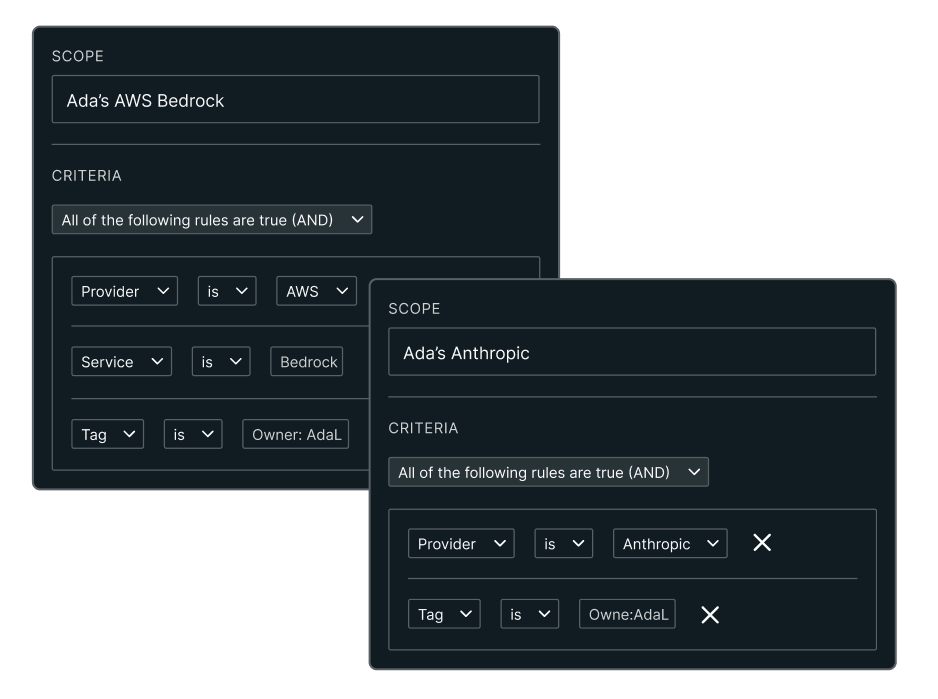
Scopes to group resources across accounts, projects, or environments into logical cost allocation units that reflect your business structure, not just your cloud account hierarchy
Improve Allocation Accuracy.


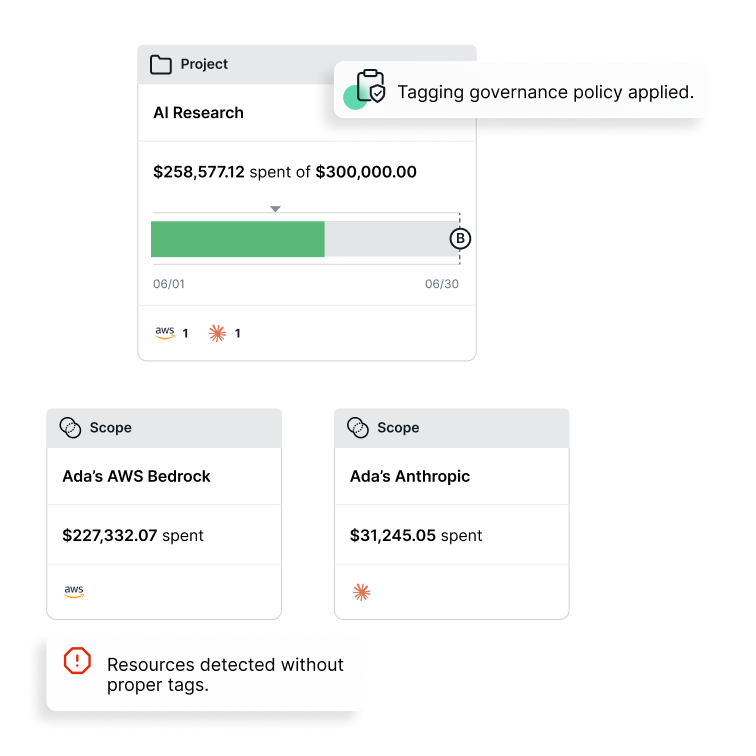
Tagging is a valuable part of cloud cost allocation, but organizations shouldn’t need perfect tagging hygiene before they can allocate costs accurately. Kion meets you where you are: enforcing tagging automatically for resources going forward while giving you flexible tools to allocate untagged or shared resources without waiting for a tagging cleanup.
For organizations building toward better tagging discipline, Kion’s automated tagging policies ensure new resources are tagged correctly at provisioning time. For resources that aren’t tagged, or where tagging isn’t the right approach, Kion’s Scopes let you group resources using other criteria and allocate them accurately without relying on tags at all.
The result is accurate cost allocation regardless of where your organization is on the tagging maturity curve, and automated tools to improve that maturity over time.

Auto-tagging policies
automatically apply required tags to new resources at provisioning time across AWS, Azure, and GCP so tagging hygiene improves without manual effort.

Scopes
let you group resources by criteria beyond tags (account, service, region, or custom criteria) for accurate allocation even when tags are incomplete or inconsistent.

Tagging compliance
monitoring identifies untagged or incorrectly tagged resources in real time, so teams actively improving their tagging coverage can track progress and prioritize remediation.
Track Spend Against Funding Sources
With Funding Sources, you can granularly track spend against contracts, CLINs, purchase orders, virtual wallets, or however your organization chooses to track funding. Funding Sources provide a flexible way to allocate cloud costs based on where funding actually originates and maps spending directly to the financial source supporting it, whether that's a contract, grant, purchase order, or internal virtual wallet.
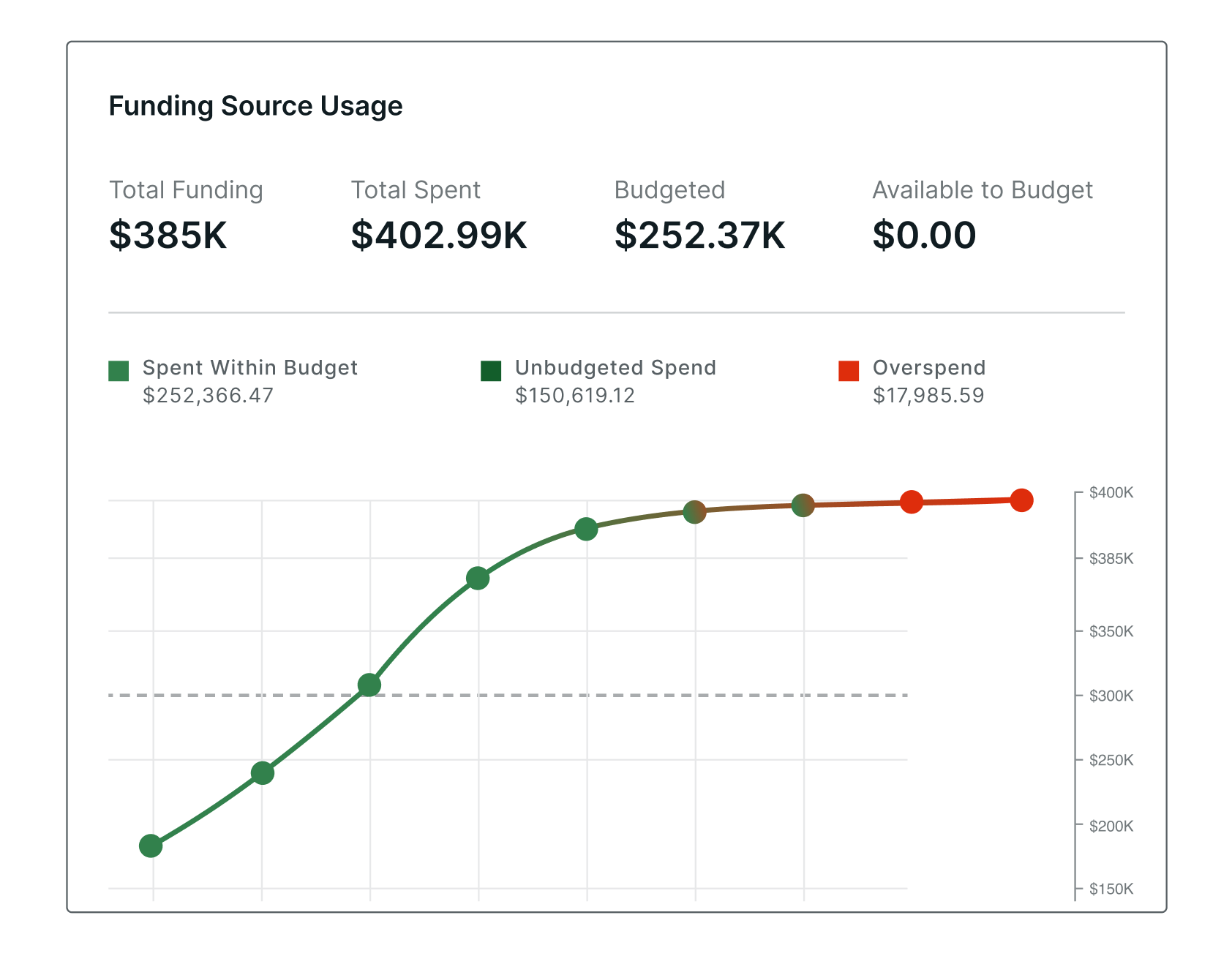
By mapping spending to specific funding pools, teams gain clear visibility into how resources are being consumed across projects, departments, and initiatives. Funding Sources also provide guardrails around how funds are consumed so teams can see exactly how much funding remains available while leaders gain a complete picture of how allocated funds are being used across the environment. The result is more transparent cost allocation, improved financial accountability, and a clearer understanding of how cloud investments map back to the business.
Beyond Cloud
Allocate Costs Across Your Entire Technology Portfolio
Traditional cloud cost allocation tools stop at the public cloud bill. But modern technology spend includes SaaS subscriptions, AI model costs, private cloud, and on-premises infrastructure — none of which appear in AWS, Azure, or GCP billing data.
 $200K
 $30K
 $97K

 $9K
 $9K
 $9K
Kion extends cost allocation beyond public cloud by ingesting any data that follows the FOCUS (FinOps Open Cost and Usage Specification) format. With this unified dataset, teams can apply the same showback and chargeback models, tagging strategies, and governance policies across their entire technology portfolio.
Kion currently provides custom FOCUS converters for:
Anthropic, OpenAI, MongoDB Atlas, Databricks, VMware, OpenCost, Azure Partner Center
Apply the same allocation rigor to AI model spend, SaaS tools, and on-prem infrastructure that you apply to cloud, giving your organization a complete picture of technology cost ownership.
Why Organizations Choose Kion for Cloud Cost Allocation
No other cloud cost allocation platform integrates allocation accuracy with automated governance the way Kion does. Here’s what that means in practice:

Allocation accuracy without tagging perfection.
Kion’s Labels, Scopes, and shared cost allocation methods let organizations allocate costs accurately today — not after a tagging cleanup project. Most platforms require consistent tagging before allocation works correctly.

Governance-enforced tagging at the source.
Kion’s automated tagging policies prevent untagged resources from entering the environment in the first place, across AWS, Azure, GCP. Allocation accuracy improves automatically over time, not through manual remediation.

A unified allocation framework across cloud, SaaS, and AI spend.
Kion’s Labels, Scopes, and shared cost allocation methods let organizations allocate costs accurately today — not after a tagging cleanup project. Most platforms require consistent tagging before allocation works correctly.

Built for regulated and complex enterprises.
Kion’s self-hosted architecture keeps all cost allocation data within your own cloud environment — a hard requirement for public sector and regulated industries that SaaS-only allocation tools cannot meet.
Kion gives FinOps teams a single platform for cloud cost allocation that works regardless of tagging maturity, scales across cloud, SaaS, and AI spend, and builds allocation accuracy into the governance layer, not onto it.
Whether you’re starting with showback or running full chargeback across a complex multi-cloud environment, Kion’s allocation framework grows with your practice.
Frequently Asked Questions
What is cloud cost allocation and why does it matter?
Cloud cost allocation is the process of attributing cloud and technology spending to the appropriate teams, projects, products, or business units. Without it, organizations can’t hold teams accountable for the costs they drive, support showback or chargeback reporting, or calculate product-level unit economics. Kion addresses this through virtual tagging (Labels), hierarchical cost grouping via the Kion Org Chart, Billing Rules, and Scopes — a flexible framework that reflects how the business actually operates, not just how cloud accounts are structured.
What is the difference between showback and chargeback in FinOps?
Showback is the practice of reporting cloud costs back to the teams or business units that generated them for awareness and accountability, without actually billing those teams internally. Chargeback goes further, actually transferring the cost to those teams’ budgets through internal accounting processes. Kion supports both models with flexible cost allocation, virtual tagging, hierarchical cost grouping, and Billing Rules, allowing organizations to choose the right accountability model for their culture and financial processes, and to evolve from showback to chargeback as their FinOps maturity grows.
Which FinOps tools support showback and chargeback reporting?
Kion’s approach to showback and chargeback is differentiated by its integration of cost allocation with automated governance: tagging policies are enforced at provisioning time rather than corrected after the fact, and allocation accuracy is maintained through continuous policy enforcement rather than manual cleanup. For regulated enterprises and public sector organizations, Kion’s self-hosted architecture ensures all cost allocation data stays within the organization’s own cloud environment. Other FinOps platforms that support showback and chargeback reporting include Apptio Cloudability, CloudZero, Vantage, and Finout.
How does tagging strategy affect cloud cost allocation accuracy?
Tagging improves cost allocation, but incomplete tagging doesn’t have to block allocation work. Kion provides multiple paths to accurate cost attribution regardless of tagging maturity: automated tagging policies enforce required tags on new resources at provisioning time, Scopes allow you to group and allocate resources using criteria beyond tags, and shared cost allocation lets you distribute costs across teams by percentage or proportional spend without requiring individual resource tagging. For organizations with strong tagging discipline, Kion reinforces it automatically. For organizations still building that discipline, Kion’s allocation framework works accurately in the meantime.
What are cloud cost allocation best practices for multi-cloud environments?
Effective multi-cloud cost allocation requires four foundational practices: consistent tagging standards enforced across all providers, a hierarchical organizational structure that maps cloud accounts to business units, a unified platform that normalizes billing data across AWS, Azure, GCP, and OCI, and support for both showback and chargeback models depending on team maturity. Kion supports all four: automated tagging enforcement prevents untagged resources at provisioning time, the Kion Org Chart maps cloud accounts to business units hierarchically, FOCUS-standardized billing ingestion normalizes data across providers, and flexible allocation models support any accountability structure from basic showback to full chargeback.