
FinOps for AI
Get started with AI tokenomics: Visibility, cost control, and governance through automated enforcement of AI token usage and spending.


AI investment is accelerating faster than most organizations can govern it. According to Gartner, worldwide spending on AI is forecast to reach $2.52 trillion in 2026, a 44% increase year-over-year. As organizations expand AI usage across AWS Bedrock, Azure AI Foundry, OpenAI, Anthropic, and others, a familiar problem is emerging: AI spend is growing faster than teams can track it, attribute it, or control it.
FinOps for AI is the practice of applying financial governance to AI and GenAI spend. It brings the same visibility, cost allocation, and enforcement discipline that tamed cloud sprawl to AI token usage and model costs. At its core, it’s about understanding the tokenomics behind your AI spend: who is consuming tokens, through which models, at what cost, and whether that spend is tied to real business value.
Visibility is the starting point. Governance is what prevents the bill from growing unchecked.
Kion extends its FinOps+ platform to cover AI spend end-to-end, giving organizations a single place to attribute costs, set budgets, and enforce controls across both cloud-hosted AI services and direct AI provider spend before overrun occurs.
Kion brings FinOps discipline to AI spend
As organizations expand their use of AI, it becomes increasingly difficult to gain a clear view of total AI spend both across cloud providers (including AWS Bedrock, Azure AI Foundry, Google Enterprise Agent Platform, and OCI) as well as native AI providers such as OpenAI and Anthropic.
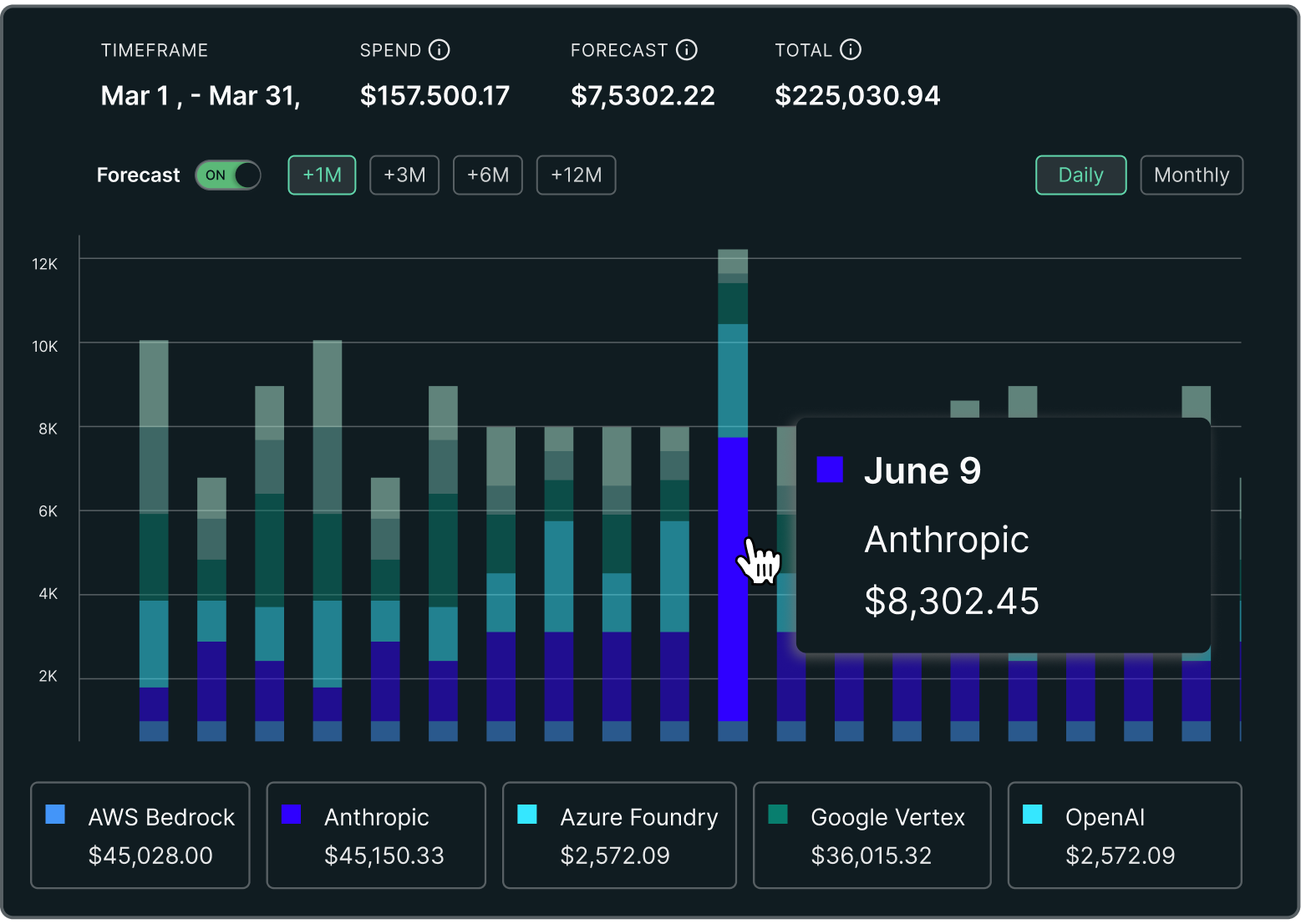
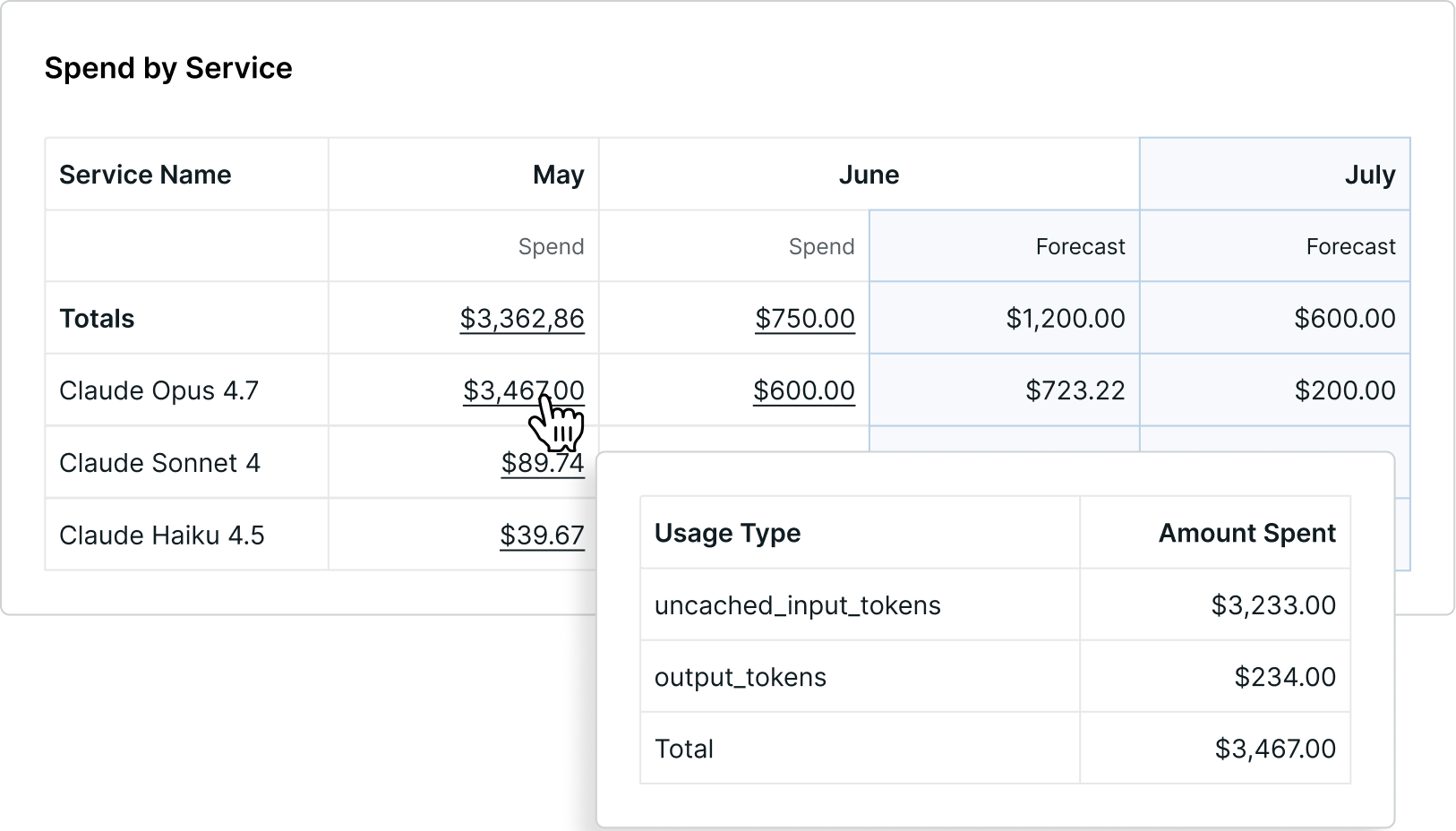
Kion brings FinOps discipline to AI and GenAI, providing granular visibility into token costs by model, provider, input versus output token split, and cache status across both cloud-hosted AI services and direct AI provider spend. From there, it enables accurate cost allocation to the teams and projects generating AI spend, and then enforces budgets and guardrails to keep costs under control.
Accurately Attribute AI Costs
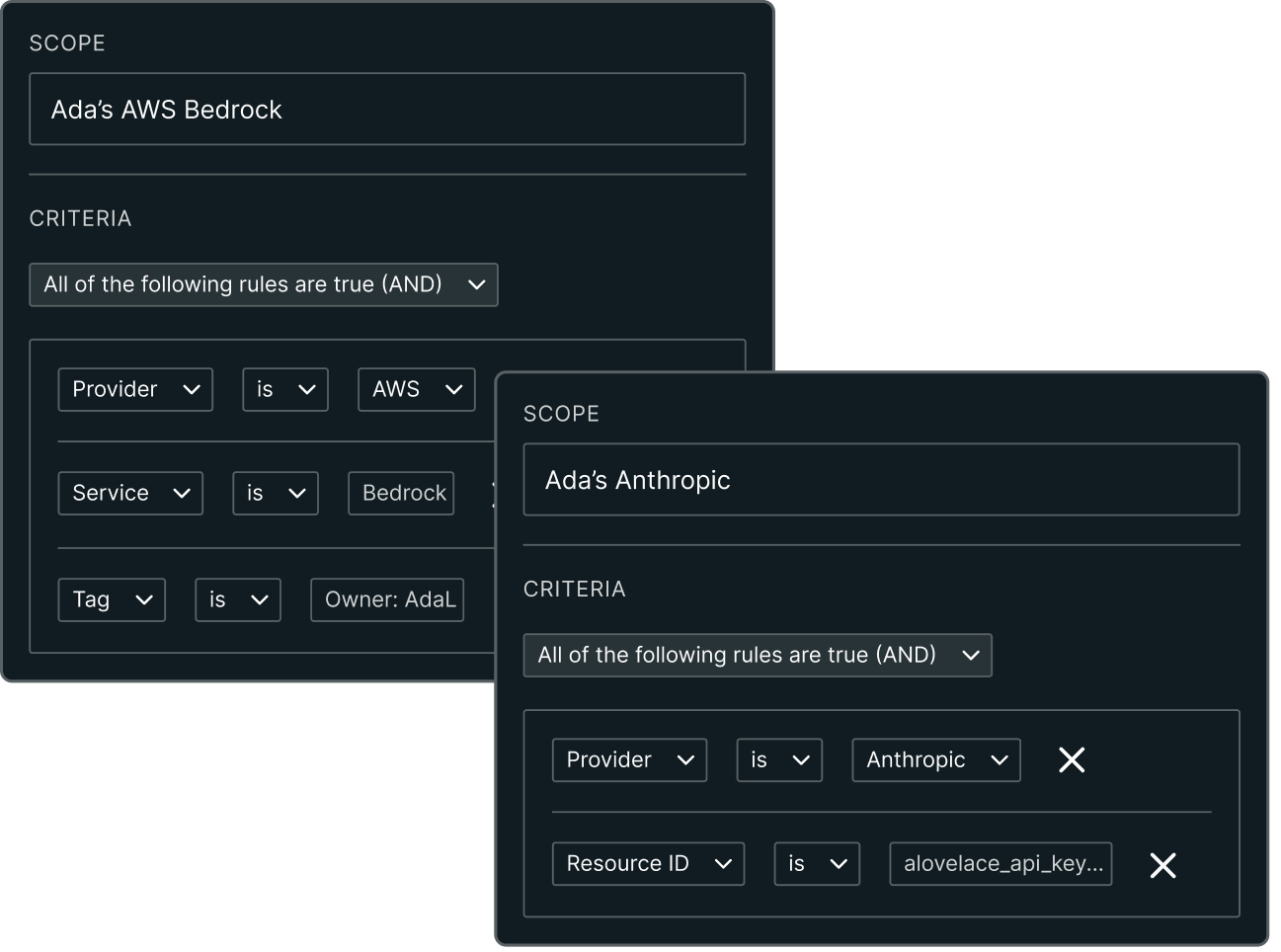
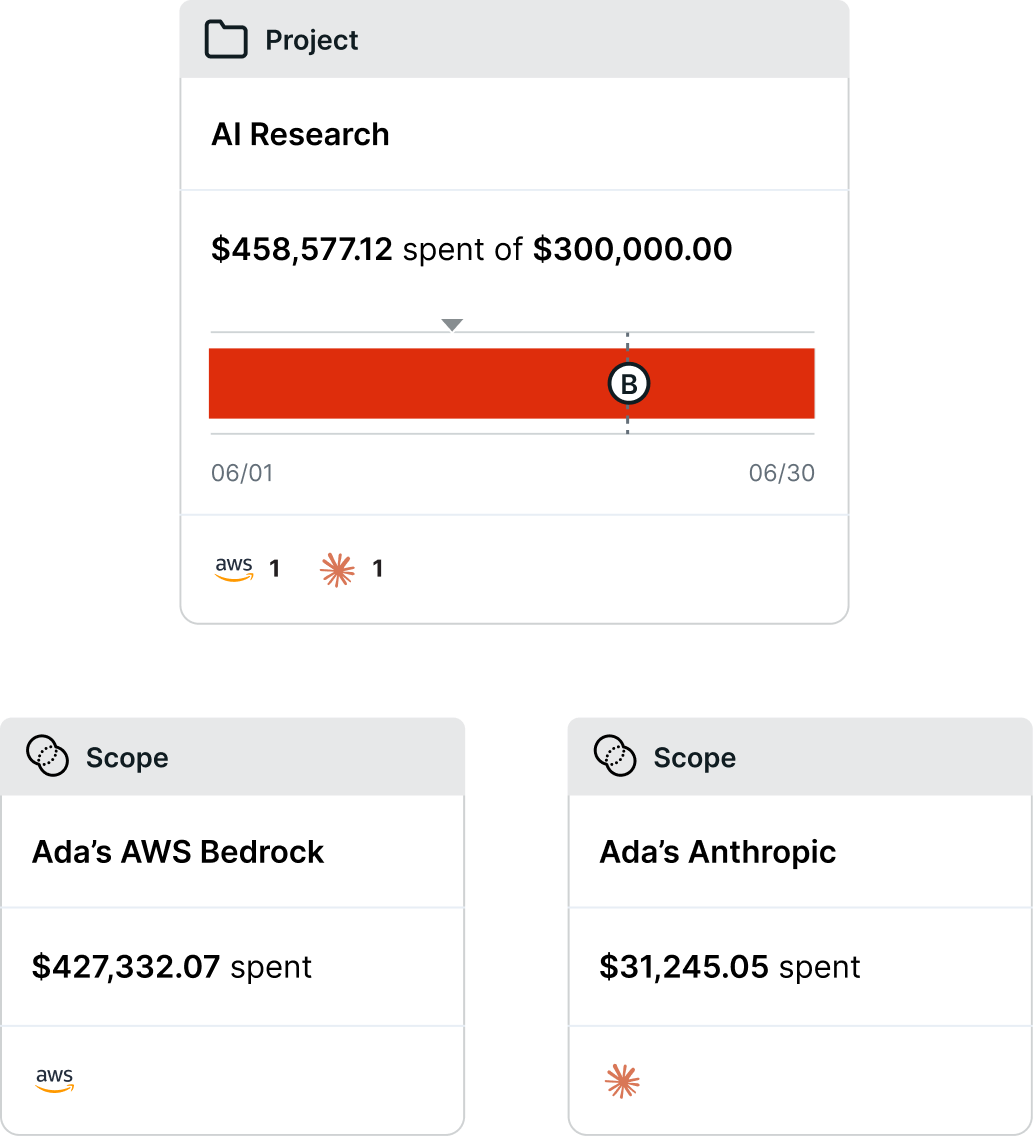
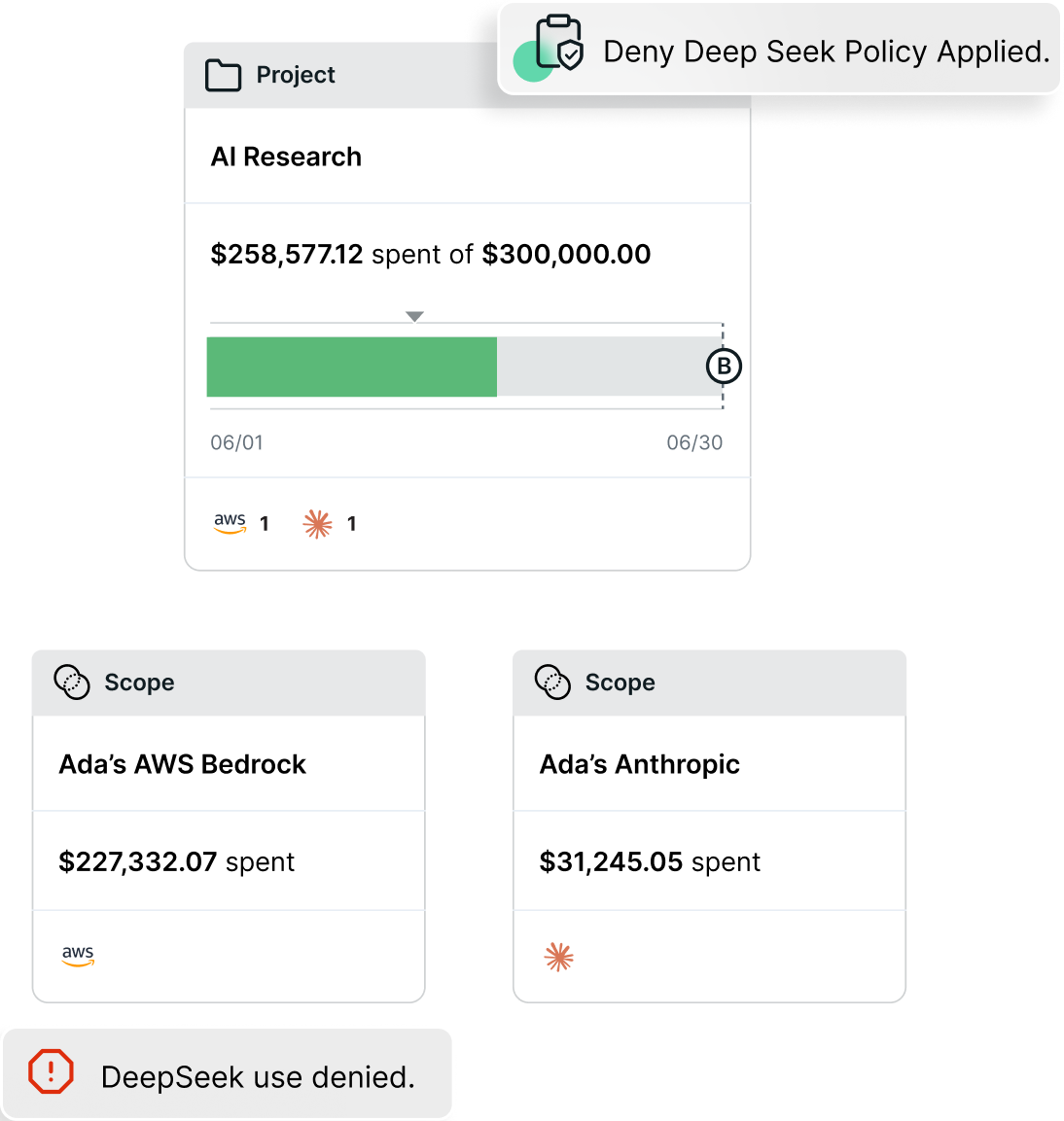
With Kion’s Scopes feature, you can flexibly group and allocate AI costs to the teams, projects, and departments where it is being used, providing insight into model utilization, token costs, and the underlying token economics behind AI spend.
For example, you can attribute all AWS Bedrock Anthropic Claude usage to a specific product team and project, showing exactly how many input and output tokens were consumed, at what cost, and against which budget
Visibility Alone Won't Prevent Overspending
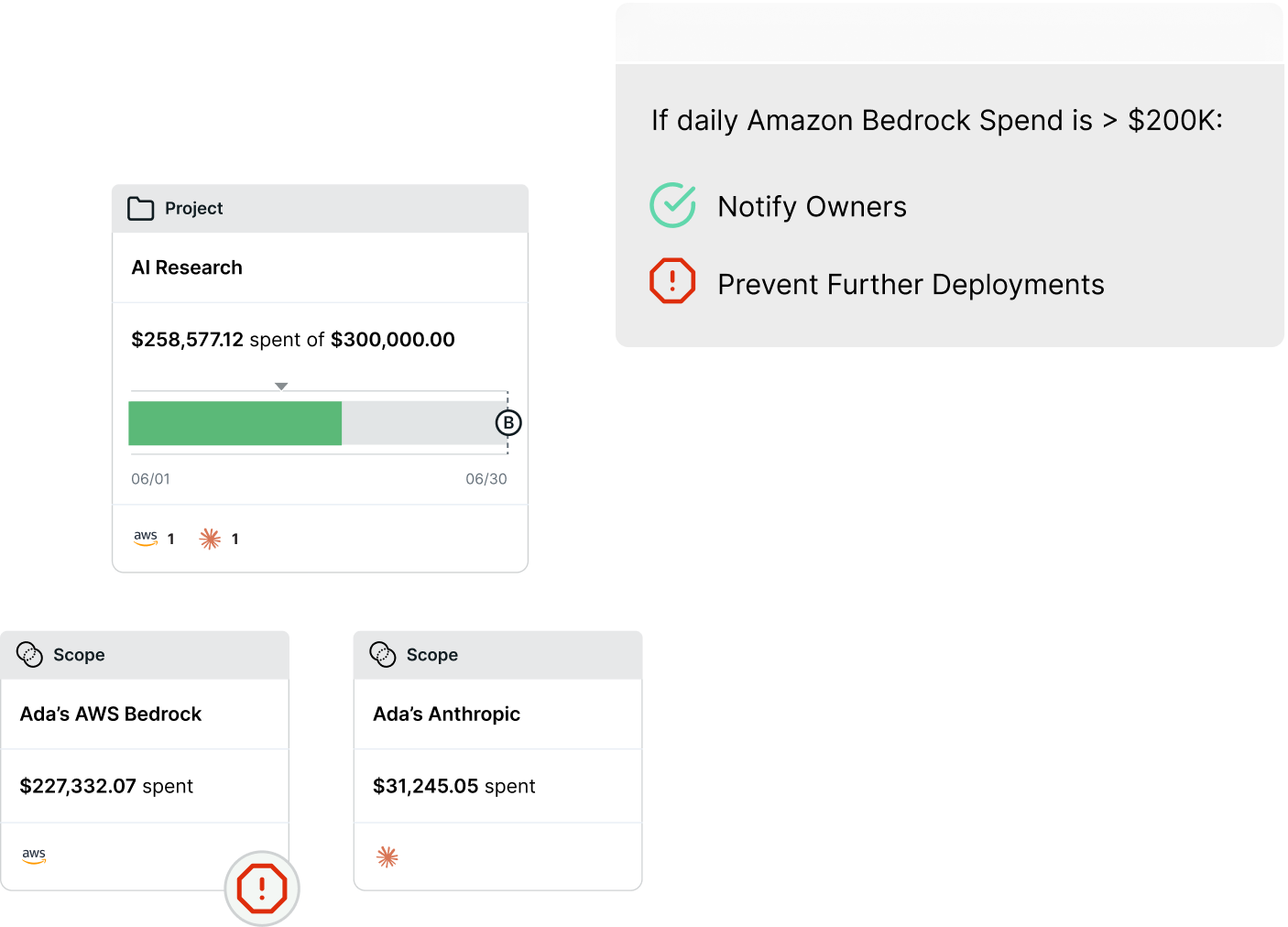
Understanding where AI spend is occurring is only the first step. Without budgets, guardrails, and enforcement, costs can continue to grow unchecked.
Set Budgets & Preventative Financial Guardrails
With budgets and guardrails, you can notify stakeholders as AI token costs and usage approach defined thresholds, or automatically enforce controls to stop additional activity, preventing cost overruns before they occur.
AI Compliance Guardrails
In addition to financial guardrails, Kion provides compliance guardrails that help organizations enforce AI governance policies and reduce risk.
Track, Analyze, and Forecast AI Spend Across Every Model and Provider
With token cost data broken down by model, provider, and usage type, you can identify which AI services are driving spend growth, which usage patterns are inefficient, and where optimization opportunities exist across your environment.
Kion’s analysis and forecasting capabilities let teams project future AI costs based on current consumption trends, giving budget owners the visibility they need to plan accurately and avoid surprises before the bill arrives.
Connect AI Spend to Business Value
Controlling AI costs is only half the job. The other half is knowing whether the spend is worth it.
Frequently Asked Questions
What is FinOps for AI?
FinOps for AI is the practice of applying financial governance to AI and GenAI spend. It brings the same visibility, cost allocation, and enforcement discipline that cloud FinOps applied to infrastructure sprawl — now applied to AI token usage, model costs, and AI service spend across providers like AWS Bedrock, Azure AI Foundry, OpenAI, and Anthropic.
How is FinOps for AI different from traditional cloud FinOps?
Traditional cloud FinOps governs compute, storage, and network resources billed by the hour or gigabyte. FinOps for AI governs token-based consumption across foundation models, where costs are driven by who calls which model, how many input and output tokens are processed, whether caching is used, and how frequently requests are made. The cost drivers are different, the attribution logic is different, and the enforcement controls need to operate at the model and token level rather than the resource level.
What is AI tokenomics?
AI tokenomics refers to the cost structure behind AI model usage: how tokens are priced (typically per 1,000 input and output tokens), how those costs vary by model and provider, how caching affects cost, and how total spend accumulates across teams and use cases. Understanding your AI tokenomics means knowing who is consuming tokens, through which models, at what cost per token, and whether that consumption is tied to measurable business outcomes.
How do you allocate AI costs to the right teams and projects?
AI cost allocation requires tagging and grouping AI service usage by the teams, applications, or projects generating it. In Kion, Scopes let you attribute AI costs across cloud-hosted AI services (such as AWS Bedrock and Azure AI Foundry) and direct AI provider spend (such as OpenAI and Anthropic) to specific business units, enabling accurate chargeback and showback at the model and token level.
How do you set budgets for AI model spend?
Budgets for AI spend work similarly to cloud budgets, with thresholds set at the team, project, or model level. Kion lets you define spending thresholds and trigger notifications when token costs approach those limits, or automatically enforce controls to stop additional AI activity before a cost overrun occurs.
How do you prevent unauthorized or disallowed AI model usage?
Kion’s compliance guardrails let organizations restrict access to specific AI models, preventing teams from using services that fall outside security, compliance, or governance policies. For example, you can block access to models such as DeepSeek across your entire cloud environment, ensuring AI usage stays within approved boundaries.
How do you measure AI ROI?
Measuring AI ROI requires connecting AI spend data to business outcomes. The starting point is accurate attribution: knowing which team or project generated which costs, for which use case. From there, teams can compare AI spend against the productivity gains, revenue, or cost savings the AI usage produced. Without accurate cost allocation at the model and token level, ROI calculations default to estimates.
How does Kion support AI spend forecasting?
Kion provides token cost analysis by model, provider, input versus output, and cache status, helping teams understand consumption trends and project future costs. Scopes connect costs to teams and projects, while budget thresholds notify stakeholders as spend approaches defined limits.
For the step-by-step method, see how to forecast AI token spend.
What AI providers does Kion support for FinOps governance?
Kion supports financial governance across cloud-hosted AI services including AWS Bedrock, Azure AI Foundry, Google Enterprise Agent Platform, and Oracle Cloud Infrastructure, as well as direct AI provider spend from OpenAI and Anthropic.