A few months ago, we ran a hackathon at Kion. Great energy, some genuinely interesting ideas, a lot of creative people doing what they do when you give them space and a problem to solve. And then the bill came.
One member of our sales team had spent more on AI tokens than our entire engineering team combined.
Nobody meant to do it. There were no rogue actors, no carelessness, no malicious intent. There was just someone who had access to an AI tool, had an idea, and ran with it. Repeatedly. Without any visibility into what that usage was costing, and without any guardrails to slow it down.
That was a wake-up call for us. And if you’re honest with yourself, you’ve probably had a version of that moment too, or you’re about to.
This Isn’t the Same Problem You Solved in Cloud
FinOps practitioners spent years teaching engineers to care about cost. The message was always “this isn’t about cutting what you do, it’s about getting value from what you spend.” And slowly, it worked. Engineers started tagging resources, right-sizing instances, thinking about what they left running over the weekend.
The thing is, that problem was relatively bounded. Cloud cost was largely an engineering problem. You had to have access to the infrastructure layer. You had to know how to spin up a VM. The blast radius of any one person’s inattention had limits.
AI blew that wide open.
Token-based billing doesn’t care about your job title. Your accounting team can rack up charges experimenting with a document summarizer. Your CEO can kick off an agent that burns through your monthly AI budget in thirty minutes while trying to prep for a board meeting. Your sales team, as we learned firsthand, can outspend your engineers without blinking.
Agent-based workflows compound this further. When a person runs a prompt manually, there’s at least a human in the loop deciding to press send again. When an agent runs autonomously, there’s no natural stopping point. A single misconfigured loop can make thousands of API calls before anyone notices and by the time the spike shows up in a report, the damage is done. That’s a different category of risk than anything cloud cost management was designed to catch.
And here’s the part that makes this complicated: that’s actually by design. The whole point of AI tools is that they’re accessible. They’re powerful. They make people faster and more capable at their jobs. The same quality that makes AI genuinely transformative for your organization is the same quality that makes it a cost governance problem unlike anything FinOps has faced before. The democratization of these tools is exciting and risky in equal measure, and you can’t separate those two things.
Start With Visibility. But Don’t Stop There.
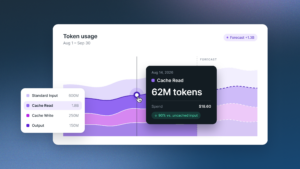
If you don’t have clear visibility into what your organization is spending on AI, by team, by use case, by model, that’s where you start. Full stop. You can’t manage what you can’t see, and you can’t build a culture of thoughtful use if nobody knows what impact their AI usage has on the monthly bill.
This is where platforms like Kion matter. Getting AI spend ingested, attributed, and surfaced alongside the rest of your cloud costs isn’t a nice-to-have anymore. It’s the foundation. Without applying FinOps discipline to AI spend, you’re having a culture conversation with no data behind it, which means you’re essentially asking people to be responsible stewards of a resource they can’t see and have no baseline for.
Part of what makes AI spend different from cloud spend is how fast it can move. A cloud cost anomaly typically builds over a day. An AI cost anomaly can materialize in minutes. That changes what “visibility” has to mean. It can no longer be just a weekly report, but real-time alerting that catches a spike before it becomes a line item your CFO is asking about.
But visibility creates the opportunity for awareness. It doesn’t create awareness by itself.
We learned that with cloud. You can show an engineer their spend. You can set a budget alert. And if they don’t understand why it matters, they’ll snooze the alert and move on. FinOps only started working in cloud when practitioners stopped auditing engineers and started partnering with them. When the conversation shifted from “you’re spending too much” to “let’s figure out what good looks like together.”
AI needs that same shift. The tooling gets you in the door. The culture change is what keeps the door open.
FinOps for AI Is a Company-Wide Practice, Not a Technical One
When cloud cost was an engineering problem, your culture-building had a defined audience. You knew the vocabulary they spoke, you had shared technical context, and you could build a FinOps practice that lived inside a relatively contained org structure.
With AI, your audience is everyone. And most of them have no mental model for what tokens cost, how agent loops multiply usage, or why the free tier they started on quietly became a $4,000 monthly invoice. They’re not being reckless. They genuinely don’t know. Nobody taught them because, until recently, nobody needed to.
That’s the new job of a FinOps practitioner. Not just dashboards and budget caps, but actual awareness-building across the org. What does healthy AI use look like? How do you help a non-technical stakeholder understand that running the same prompt fifty times to get a perfect output isn’t free? How do you build a culture where people treat AI spend the way good engineers eventually learned to treat cloud spend: as a shared resource with real consequences, not an unlimited utility?
The tools to support this are getting better fast. But the cultural muscle has to be built intentionally, and it has to reach people who have never once thought about cost management in their careers. That’s a different challenge than anything FinOps has tackled before.
The Practitioners Who Get Ahead of This Will Be in a Different Position Than Those Who Don’t
You’re going to need tooling. You’re going to need governance. Budget limits, model policies, spend attribution by team and project, the ability to see an anomaly before it becomes an awkward conversation with your CFO. Those processes matter, and organizations that don’t build it are going to feel the consequences.
Part of that governance is deciding which models are approved for use in the first place. Not every model meets your organization’s security or compliance bar. Having visibility and budgets means nothing if employees can bypass both by routing requests through a model your security team never vetted.
But the practitioners who really get ahead of this are the ones who recognize that tooling is the starting line, not the finish line. The ones who built FinOps for cloud learned that it was never really about cost reduction. It was about making sure the spend was generating a positive ROI, and they apply that same thinking to AI. It has to be now. Before your next hackathon. Before your sales team discovers what an agent can do. Before you’re explaining to your CFO why AI has completely turned your budget upside down.
AI is a powerful, democratized, always-on cost driver that every employee can touch. Treating it with the same intentionality and care we eventually brought to cloud isn’t optional. It’s the only way this scales responsibly.
FAQ:
How do you prevent runaway costs from AI agent loops?
Autonomous AI agents can make thousands of API calls without a human in the loop to stop them. Preventing runaway costs requires real-time alerting that catches usage spikes as they happen, combined with enforcement controls that can automatically stop activity when spend crosses a defined threshold — not after the fact in a weekly report.
How do you manage AI spend when every employee has access?
Unlike cloud infrastructure, AI tools are accessible to every function in the organization — sales, marketing, finance, operations. Managing that spend requires visibility at the team and use case level, not just the infrastructure layer. The cultural shift mirrors what FinOps practitioners built for cloud: moving from “this is an engineering problem” to “this is a shared resource everyone is responsible for.”