As organizations scale, financial ownership no longer fits neatly into cloud account structures.
Teams span accounts, shared services blur boundaries, and spend increasingly extends beyond cloud into SaaS and GenAI. The result is a disconnect between how costs are incurred and how ownership is understood.
This makes it difficult to answer:
- Who is responsible for this spend?
- How is ownership best represented across services?
- Where should accountability live?
With Kion v3.15, Scopes introduces a new way to model financial ownership, aligned to how organizations actually operate across cloud and beyond.
What Are Scopes?
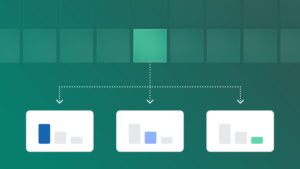
Scopes define logical ownership boundaries using metadata and rules, independent of accounts, providers, or spend type.
They create a flexible layer of visibility across:
- Cloud infrastructure
- SaaS applications
- GenAI and usage-based services
With Scopes, teams can utilize detailed criteria and granular metadata to:
- Understand total technology spend in context
- Easily organize costs by team, application, or business unit
- Apply financial guardrails aligned to true ownership
Scopes can separate or combine spend types, allowing teams to isolate 3rd party costs (ex: GenAI usage) or unify all spend into a single ownership view. With Scopes, any resource, type of spend, or metadata can be used to create detailed financial ownership.
Extending Kion’s Org Chart into Financial Ownership
Kion has long provided visibility through OUs and Projects. Scopes extend this by adding an ownership layer that is not constrained by accounts.
This enables organizations to:
- Better represent ownership across accounts, clouds, and services
- Align budgets and reporting to teams and applications with shared infrastructure
- Create financial guardrails at a resource level
- Connect structure with true cost ownership across all types of technology spend
From Cloud Cost to Total Technology Spend
FinOps is expanding beyond cloud into total technology spend, including SaaS, GenAI, and shared services.
Most organizations still manage these separately. Scopes unify them.
By defining ownership once and applying it across spend types, teams can:
- Create a complete view of what a team owns
- Maintain consistency across cost models
- Adapt as new spend categories emerge
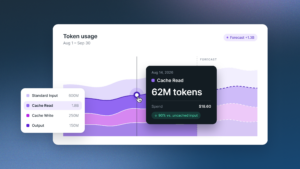
For example, with Scopes, organizations can group their GenAI spend by model type and/or token type to get better insight into the drivers of their AI spend.
A Practical Take on FinOps Scopes
The FinOps Foundation introduced Scopes to define ownership beyond traditional cloud boundaries.
Kion operationalizes this approach by aligning ownership to business context, keeping it consistent across environments and flexible over time.
Why This Matters for FinOps
Account-based ownership breaks down in modern environments with multi-cloud, shared services, and SaaS/GenAI spend.
Scopes shift to context-based ownership across all technology spend, enabling teams to:
- Align accountability to real ownership
- Unify visibility across spend types
- Apply controls where they matter
Key Advantages
- Ownership modeled independently of account structure
- Visibility across cloud, SaaS, GenAI, and shared services
- Ability to combine or isolate spend types
- Alignment between org structure and cost ownership
- Flexible, metadata-driven definitions
Model Ownership the Way Your Organization Actually Works
Scopes represent an evolution in financial ownership.
By moving beyond rigid structures, teams can align total technology spend, across cloud, SaaS, and GenAI, with real accountability.
This creates a more scalable foundation for modern FinOps.To learn more about Scopes and how they support modern FinOps practices, explore the full Kion v3.15 release.
Frequently Asked Questions About Scopes
Q: What are Scopes in Kion?
A: Scopes are a financial modeling capability in Kion that allows organizations to report on, budget for, and enforce cloud spend below the cloud account level using metadata-based rules.
Q: Why are Scopes important for FinOps teams?
A: Scopes help FinOps teams manage shared cloud environments by creating clear ownership boundaries, improving accountability, and enabling more accurate showback, chargeback, and budgeting.
Q: How do Scopes work?
A: Scopes group cloud spend dynamically using metadata such as tags, services, service categories, regions, charge details, and resource identifiers. Criteria can be selected via direct groupings or by using regex to grab alike metadata at a larger scale.
Q: Do Scopes replace cloud accounts?
A: No. Scopes operate alongside cloud accounts and do not impact access, compliance, or identity controls. They can exist on Kion projects with other accounts or independently.
Q. Can Scopes span multiple cloud accounts?
A. Yes. A single Scope can target one or multiple cloud accounts or multiple providers (SaaS, GenAI), allowing for flexible financial grouping across environments
Q: Are there limitations to Scopes?
A: Scopes do not currently support Spend Plans or Savings Opportunities, and updates require financial data reprocessing, which is not immediate.
Q. Will Scopes work with my current Kion environment?
A. Yes. Scopes are available as part of the Kion v3.15 release.
Q: Where can I learn more?
A: Learn more at kion.io or request a demo.