Most organizations know their AI spend is growing. Far fewer know where it’s going, what it’s returning, or how fast it will scale. Right now, that feels acceptable. The investment is intentional, the experimentation is energizing, and the questions around visibility and governance feel like a conversation for later.
That’s exactly how cloud felt too. When teams were racing to migrate out of data centers, the priority was speed. Modernization and optimization were problems for another day. That urgency created the sprawl, waste, and ownership gaps that FinOps practitioners have been untangling ever since. It’s where the discipline came from, and it’s a lesson that took years and real money to learn.
AI is following the same arc, and the window to get ahead of it is now. The FinOps Foundation cites AI as the top practitioner focus area going forward, and CIOs and CFOs are actively carving out budget to match the moment. But investment is moving faster than structure. And for those who lived the early cloud era, the questions already surfacing sound very familiar: which teams are driving cost, what are we actually getting from this spend, are we using the right models for the right workloads, and why did our bill spike this month?
A decade ago, those same questions were being asked about cloud. They weren’t abstract. They were real operational headaches that took years of iteration, tooling, and organizational change to address. The technologies have changed. The challenges have not. Organizations that apply a FinOps lens to AI early will be better positioned as this spend scales, because we already know what happens when dynamic, usage-based spend grows without structure. The longer you wait, the harder it is to get your arms around it.
Visibility: Where Control Starts
You cannot optimize AI spend, govern it, or prove its value until you can see it clearly.
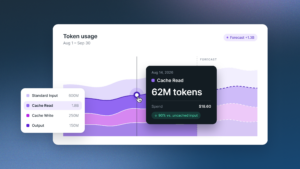
This starts with centralizing visibility. With AI, the fundamental economics are more approachable than they might seem. A model is essentially your SKU. Tokens are your unit. From there, you build the views needed to understand what’s actually happening.
At a higher level, it means understanding how AI fits into your broader technology footprint. That requires total cost of ownership (TCO) views that combine AI costs with cloud and other infrastructure spend. Not separate dashboards for separate categories, but a unified picture of where technology dollars are going and the TCO for your products or services.
This is where visibility becomes useful, because it enables a different kind of conversation. Not just how much are we spending, but is that spend generating value?
That question gets answered through unit economics such as cost per response, cost per interaction, or even simpler, AI cost compared to revenue generated.
These metrics are what move AI from the new big budget line item to an actual conversation around its value. That shift matters both for justifying continued investment and for identifying where spend needs to be reined in.
Once you can measure it, the gaps become visible. And those gaps point directly to where governance is needed.

Register for our webinar:
Tuesday, May 19th | 2:00PM EST
Governance: Letting Teams Move Fast Without Losing Control
AI innovation runs on experimentation. That’s not a problem; it’s the point. But without guardrails, experimentation gets expensive quickly, especially when there’s already pressure to move fast and budget has already been committed.
Governance is what makes speed sustainable.
The Non-Production Problem
For many organizations today, a disproportionate share of AI cost today is sitting in development, testing, and sandbox environments. These are necessary, but they are also where waste accumulates fastest.
This is one of the clearest lessons from cloud, and it’s playing out again with AI. Lower environments run longer than intended, scale beyond what any workload needs, and ownership is murky. The fix is automation: scheduled shutdowns, lifecycle policies, and governing what types of models or machines are permitted. These are not novel ideas, but consistently underinvested and overlooked as teams race to experiment.
Real-Time Controls
Automation handles the recurring waste. But you also need controls that operate in the moment:
- Spend alerts when usage exceeds expected thresholds
- Budget limits for sandbox and experimental workloads
- Access controls that gate higher-cost models to appropriate use cases
- Policy enforcement that guides how AI services are used across teams
This is particularly important given how fast AI budgets are being allocated. Without these controls, spend scales faster than anyone anticipates, and by the time leadership asks questions, the patterns are already entrenched.
The goal isn’t to slow teams down. It’s to make sure they can keep moving quickly without creating financial problems that take months to unwind.
FinOps Has Expanded. Your Approach Needs To As Well.
FinOps is not just about cloud spend. It’s about applying applying processes and structure to all of your technology investments to maximize value.
AI is the next major category that demands the same treatment. The principles haven’t changed: budget, forecast, measure, optimize, govern. What’s changed is how fast this new layer of spend is scaling, and how little structural discipline most organizations have put around it.
The teams that invest now in visibility and governance will be in a fundamentally better position as AI spend grows, both in size and in complexity. Not because they predicted the future, but because they recognized the patterns they have lived before.
Cloud taught us what happens when you wait. Costs become entrenched. Ownership gets murky. Optimization gets harder. And the conversation with finance shifts from “here’s our plan” to “here’s our explanation.”
AI is moving fast. The window to get ahead of it is open, but it won’t stay open long.
Join us Tuesday, May 19th as we explore how to take control of AI cloud spend without slowing down your teams.
At Kion, we’ve spent years helping organizations build the visibility and governance foundations that make cloud spending controllable and defensible. We’re applying that same experience to AI because the problems are familiar, and so are the solutions. If you’re thinking about how to bring structure to AI spend in your organization, we’d like to talk. You can also attend our upcoming webinar where we will focus on Automation and Governance for your organization and deep dive on how to properly govern your non-production AI environments.