AI costs don’t always belong neatly to one team, project, or application.
The AI bill is growing, but for some organizations, aligning those costs from a showback or chargeback perspective can be a challenge. Engineering has a shared Claude Code workspace. The platform team runs Bedrock inference. Marketing uses a shared AI writing tool. The spend is centralized; the consumption isn’t.
FinOps teams have handled versions of this before with cloud. But AI compounds it with shared API credentials, model access that cuts across departments, and a cost structure that doesn’t map neatly to the account hierarchies you’ve already tagged and organized.
Kion’s Shared Cost Allocation lets you take AI spend from centralized accounts and distribute it into the Scopes representing the teams, projects, and workloads that actually own the usage, using the same billing rules and reporting infrastructure you use for cloud costs today.
This guide focuses on shared AI costs where spend billed centrally needs to be distributed to the teams benefiting from it. For a broader look at how Kion tracks, governs, and controls AI token costs across your organization, see FinOps for AI.
What Is Shared Cost Allocation for AI?
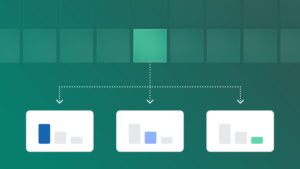
Shared Cost Allocation allows you to identify a pool of spend using defined criteria and distribute that cost across different areas of your organization.
In Kion, this is managed through Billing Rules. You define the AI spend you want to allocate using criteria, choose where that spend should go, and select how it should be distributed.
The destination for shared costs is a Scope, which provides the business context for that spend. A Scope might represent an individual, team, application, workload, product, or other ownership boundary.
This distinction is important: Shared Cost Allocation isn’t moving costs from one Scope to another. Instead, Kion identifies spend at the account level and allocates it into the destination Scopes that should be responsible for that cost.
Once allocated, shared AI costs appear alongside the other direct costs associated with those Scopes, giving teams a more complete view of their technology spend.
How to Allocate Shared AI Spend in Kion
Kion uses Billing Rules and Scopes to give organizations flexibility in how shared AI costs are distributed.
Billing Rules define the source spend you want to allocate, which could include spend from a shared Anthropic account, specific AWS Bedrock costs, or even a combination of AI spend across providers.
From there, shared costs can be distributed to the appropriate Scopes using one of three allocation methods:
- Even Split: Divide shared costs equally across destination Scopes.
- Percentage-Based: Assign specific percentages to each destination Scope based on how your organization wants to distribute the cost.
- Proportional: Distribute costs based on each destination Scope’s relative spend.
Because Scopes provide the business context for spend, organizations can allocate AI costs to the teams, projects, applications, or workloads that benefit from them, even when the original spend comes from a centralized account or originates within another part of the organization.
The right allocation approach depends on how the AI service is being used and how your organization wants to represent financial ownership. Here are a few examples of what that can look like in practice.
Common Shared AI Cost Allocation Use Cases
Shared AI spend can take many forms. Here are a few ways organizations can use Shared Cost Allocation in Kion.
🤖 Split a Shared Anthropic Account Across Engineering Teams
Suppose several engineering teams use the same Claude Code account or shared API credentials.
Instead of assigning the entire Anthropic bill to the team that owns the account, you can allocate that spend across the projects actually benefiting from the service.
If two teams share it equally, use an even split. If usage or ownership is known to be different, assign percentages that better reflect each team’s share.
🧠 Allocate AI Development Costs Across the Teams That Benefit
Shared cost allocation can also apply when AI spend has a clear owner but the resulting investment benefits teams beyond the one incurring the cost.
For example, an AI or engineering team might use several dedicated accounts to train and develop a new AI model that will eventually be used by multiple teams across the organization. Even though the underlying spend can be directly attributed to the team building the model, assigning the full cost to that team may not accurately reflect who benefits from the investment.
With Shared Cost Allocation, organizations can distribute those AI development costs across the teams, projects, or business areas benefiting from the model using an allocation method that reflects how the investment is shared.
☁️ Combine AI Spend Across Providers
AI costs don’t necessarily come from a single provider.
An organization might pay Anthropic directly while also running models through AWS Bedrock. Kion lets you define criteria that bring multiple sources of AI spend into the same allocation rule.
That means you could group relevant Claude and Bedrock costs and distribute them to the teams or applications consuming those AI services.
This helps organizations manage AI as a broader technology investment rather than treating every provider bill as a separate financial silo.
💰 Support AI Showback and Chargeback
For organizations practicing showback, Shared Cost Allocation gives teams visibility into their portion of shared AI expenses even if no internal billing occurs.
For chargeback models, those allocated costs can provide the basis for assigning shared AI expenses back to individual teams, departments, or budgets.
Either way, the goal is the same: make AI costs visible to the people responsible for the usage and give them a more accurate understanding of the technology spend associated with their work. This applies across functions. Engineering teams using shared Claude Code accounts are an obvious case, but the same approach works when marketing teams share an AI writing platform, operations teams share a workflow automation tool, or finance teams use a shared AI analytics service. Any shared AI investment can be allocated to the business contexts benefiting from it. For a full breakdown of how showback and chargeback work within Kion’s broader cost allocation framework, see Cloud Cost Allocation, Showback & Chargeback.
📊 Bring Shared AI and Cloud Costs Together
A project rarely incurs only AI costs.
The same application might use AWS infrastructure, Azure services, direct Anthropic usage, and other technology resources.
When shared AI costs are allocated into a Scope, teams can see them alongside the cloud spend already associated with that business context. This creates a more complete financial picture and makes it easier to understand the total cost of an application, team, or workload.
Allocated spend can also flow into Kion Spend Reports, allowing FinOps teams to analyze and forecast costs with shared expenses included.
Choosing the Right Allocation Method
There isn’t one universally correct way to allocate shared AI spend.
The goal should be to choose a method that is fair, transparent, and repeatable.
An equal split may be perfectly appropriate for a shared AI tool used similarly across teams. Percentage-based allocation can work well when teams have established ownership ratios. Proportional allocation can provide a more dynamic approach when the allocation should move alongside spend.
When designing a shared cost model, consider:
- Fairness: Does the allocation reasonably reflect who consumes or benefits from the AI service?
- Transparency: Can you easily explain the methodology to engineering, finance, and business stakeholders?
- Repeatability: Can the rule be applied consistently each month without creating significant manual work?
- Granularity: Are you allocating at a level that is useful without making the model unnecessarily complex?
- Materiality: Is the shared cost significant enough to justify a sophisticated allocation model?
The best shared cost model isn’t necessarily the most complex one. It’s the one your organization can consistently apply and stakeholders can understand.
Why Shared Cost Allocation Matters for AI
AI introduces many of the same financial ownership problems FinOps teams have already encountered with cloud, often with even less obvious boundaries. As outlined in Kion’s FinOps framework for managing AI token spend, attribution is one of the foundational steps to gaining visibility into AI costs before governance and optimization become possible.
Accounts may be centralized. API credentials may be shared. Models can support multiple applications. AI usage can span engineering, product, marketing, sales, and operations.
Simply knowing the total AI bill doesn’t tell you who is responsible for that spend or what business activity it supports.
Shared Cost Allocation helps bridge that gap by giving organizations a flexible way to assign otherwise shared AI costs to the teams, projects, and workloads benefiting from them.
Combined with Scopes, direct AI provider integrations, Spend Reports, budgeting, and governance capabilities, Kion’s FinOps for AI capabilities help organizations bring AI costs into the same financial accountability framework they use for the rest of their technology portfolio.
Build a More Complete View of AI Cost Ownership
As AI adoption expands, some costs will map cleanly to a single team or workload. Others won’t.
That doesn’t mean those costs have to remain sitting in a centralized account with no meaningful owner.
With Shared Cost Allocation in Kion, FinOps teams can define which AI costs are shared, determine how they should be distributed, and assign them to the business contexts responsible for that spend.
Whether you’re splitting a shared Anthropic account between engineering projects, distributing Bedrock costs across applications, or bringing AI and cloud spend together for showback and chargeback, Kion gives you the flexibility to model financial ownership around how your organization actually operates.
Frequently Asked Questions
What is shared cost allocation for AI?
Shared cost allocation for AI is the process of distributing AI expenses across the teams, projects, or workloads that benefit from them. This can include costs that are difficult to attribute directly because they originate from a shared account, centralized model access, or common AI platform, as well as costs that originate within a single team or project but support others across the organization. For example, one team might use several accounts to train an AI model that will ultimately be used by multiple teams. Even though the original spend can be attributed to the team building the model, the organization may want to distribute that cost across the teams benefiting from it. Kion’s Shared Cost Allocation provides a structured way to assign these AI expenses based on how the costs and benefits are shared across the organization, using allocation rules that reflect how the organization operates rather than simply where the spend originated.
How can I allocate shared AI costs?
Shared AI costs are allocated using Billing Rules in Kion, which identify source spend and distribute it into destination Scopes. Organizations can divide shared costs evenly across all destination Scopes, assign fixed percentages to each, or allocate proportionally based on each Scope’s relative spend.
How is shared AI cost allocation different from direct AI cost attribution?
Direct AI cost attribution maps spend from a dedicated team account directly to that team’s Scope. Shared cost allocation handles the scenario where AI spend cannot be attributed directly because multiple teams share the same account, API credentials, or AI platform. In Kion, Billing Rules identify the pooled spend and distribute it to the appropriate destination Scopes using an even split, fixed percentage, or proportional allocation based on relative spend. The allocation method you choose reflects how your organization actually uses the shared service.
Can I allocate Anthropic spend across multiple teams?
Yes. Anthropic can be connected directly as a Billing Source, bringing Anthropic token spend into Kion for cost visibility, budgeting, and spend enforcement. From there, a Billing Rule can identify spend from the Anthropic account and distribute applicable costs across destination Scopes representing different teams, projects, or workloads.
Can I allocate both Anthropic and AWS Bedrock costs?
Yes. Kion’s Billing Rule criteria can be used to identify multiple sources of relevant spend, allowing organizations to include AI costs from direct Anthropic spend and AWS Bedrock in the same allocation strategy. This lets teams treat AI spend as a single pool regardless of which provider or service it originates from.
What is the difference between Scopes and Shared Cost Allocation?
In Kion, Scopes define logical financial ownership boundaries for reporting, budgeting, and governance. Shared Cost Allocation takes spend from source accounts and distributes that cost into destination Scopes. Shared Cost Allocation does not transfer spend from one Scope to another.
What allocation methods are available for shared AI cost allocation?
Kion supports three methods: even splits, which divide shared costs equally across all destination Scopes; fixed percentage allocation, which assigns a specific share to each Scope; and proportional allocation, which distributes costs based on each Scope’s relative spend. The right method depends on how the shared service is used and what is simplest to maintain consistently across teams.
Can shared AI costs be used for showback and chargeback?
Yes. Allocating shared AI costs to the appropriate Scopes gives organizations a clearer basis for showing teams their portion of shared expenses or incorporating those costs into internal chargeback processes. Kion’s Shared Cost Allocation provides the attribution foundation both models depend on. For more on how showback and chargeback work within Kion’s broader cost allocation framework, see Cloud Cost Allocation, Showback & Chargeback.
Can shared AI costs be allocated to non-engineering teams?
Yes. AI spend is no longer limited to engineering. Marketing teams use shared AI writing and content platforms, operations teams use AI-powered workflow tools, finance teams use AI analytics services, and sales teams increasingly rely on shared AI assistants. Kion’s Billing Rules and Scopes are not limited to engineering workloads. Any team or department with a Scope can be a destination for shared AI cost allocation, allowing organizations to assign AI expenses to the business contexts benefiting from them regardless of function. For more on why AI cost governance has to extend beyond engineering, see Tokens Don’t Care About Your Job Title.
Can allocated AI costs be included in reporting and forecasting?
Yes. Once allocated, shared costs appear alongside direct spend in destination Scope reporting and can be analyzed within Kion Spend Reports, helping teams understand and forecast a more complete view of their technology costs.